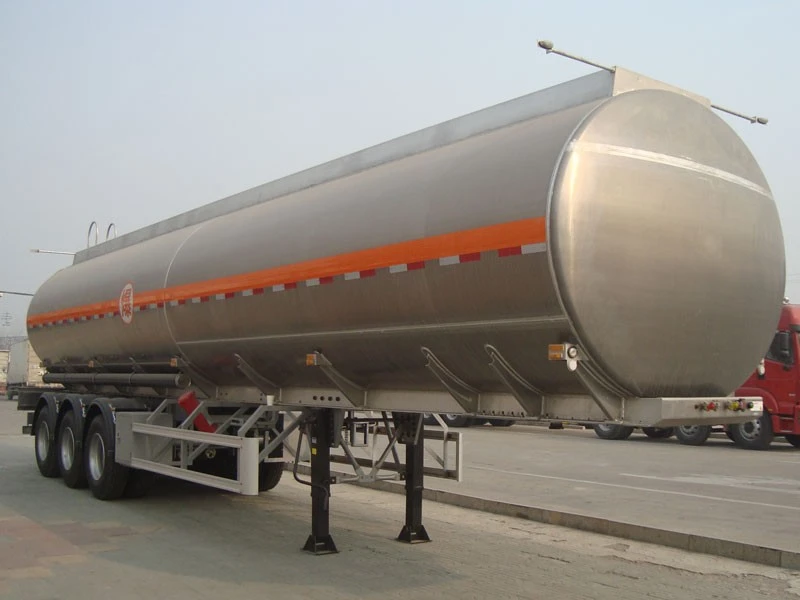
When buyers ask about a liquid tanker trailer, the first question after capacity is usually the tank material. Carbon steel, stainless steel and aluminum are all available on Vehicle Master tankers — and the right choice depends on what the trailer will carry, where it will operate and how long you expect it to serve.
Carbon Steel: The Workhorse
Carbon steel is the most cost-effective option and the standard choice for fuel, diesel and bitumen transport. It handles high-temperature cargo such as hot asphalt well, and its strength makes it a common pick for large volumes. The trade-off is corrosion: carbon steel tanks generally need a protective coating inside and out, and they are heavier than aluminum. For ordinary petroleum products with proper maintenance, carbon steel offers the best cost-per-litre of the three.
Stainless Steel: Corrosion Resistance First
Stainless steel tanks — commonly 304 or 316L grades — are chosen when the cargo is aggressive or purity matters. Strong acids such as sulfuric acid and nitric acid, food-grade liquids such as edible oils and juices, and sensitive chemical products all suit stainless steel. It resists corrosion and contamination without an internal coating, which also simplifies cleaning between loads. The cost is higher and the tank is heavier than aluminum, so stainless steel is usually specified when the cargo demands it rather than for general fuel work.
Aluminum: Maximum Payload
Aluminum is roughly a third lighter than steel, which means more of the legal gross weight can go into cargo. For fuel and diesel distribution — where every kilogram of payload counts — aluminum tankers routinely carry more litres per trip and use less fuel to move them. Aluminum also conducts heat well and resists corrosion from ordinary fuels. It is not the right choice for strong acids or highly aggressive chemicals, and it costs more than carbon steel, but for high-mileage fuel fleets the payload gain often pays the difference back.
What Else to Specify
Material is one decision among several that shape the trailer: tank capacity from 20,000 to 55,000 litres, 2/3/4 axle configurations with 13/16 ton axles from FUWA or BPW, one to nine compartments for multi-product deliveries, thermal insulation for temperature-sensitive cargo, and safety equipment such as anti-explosion manhole covers and emergency shut-off valves. European-system configurations are available where the destination market requires them.
How to Decide
Work in this order: cargo first — aggressive chemicals point to stainless steel, food liquids to stainless steel, ordinary fuels to carbon steel or aluminum; then payload — if every trip is weight-limited, aluminum earns its premium; then volume and axles — match capacity and axle count to your routes and local weight rules. When you request a quotation, tell our sales engineers the cargo, the capacity you need and the destination — they will confirm the material, compartments and equipment for your configuration.
Browse the liquid tanker range or send your enquiry for a factory-direct quotation.