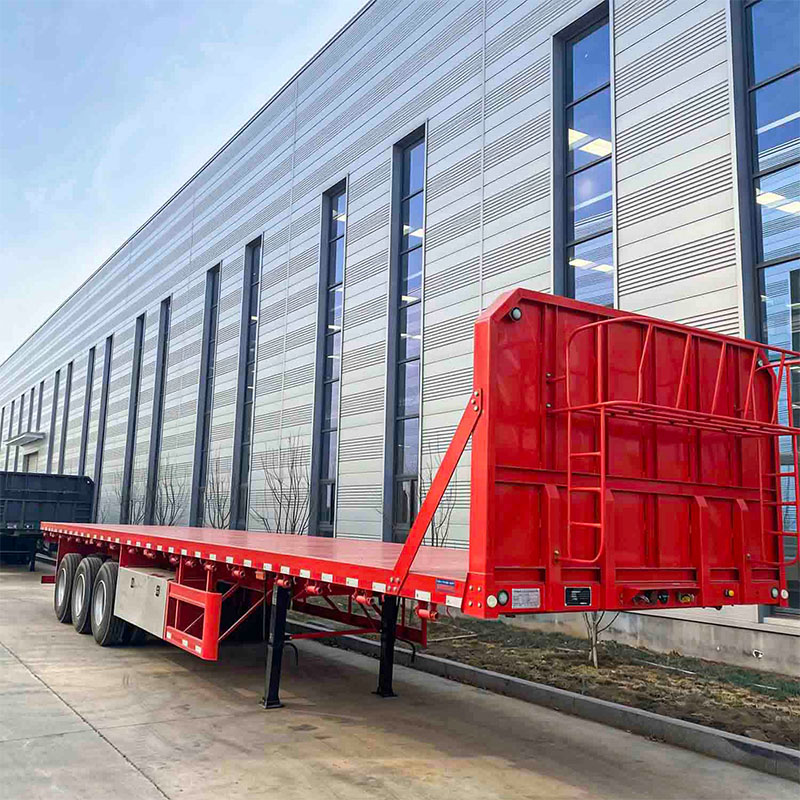
Search Google for “how much does a semi trailer cost”, and you will find all kinds of information — just not the exact price figure you’re after.Dealer directories, spec sheets, financing calculators — but no price tag. That is not evasion. A semi trailer is a configured industrial product, closer to a small construction project than a retail item, and the honest answer to how much is a semi trailer is always another question: which configuration, headed to which port?
At our quote desk, every inquiry turns into a cost sheet built around six decision lines. Walk through them once and you will know exactly where a semi trailer price comes from — and which lines you can actually move.
Line 1: The Chassis Platform Defines Your Initial Price Range
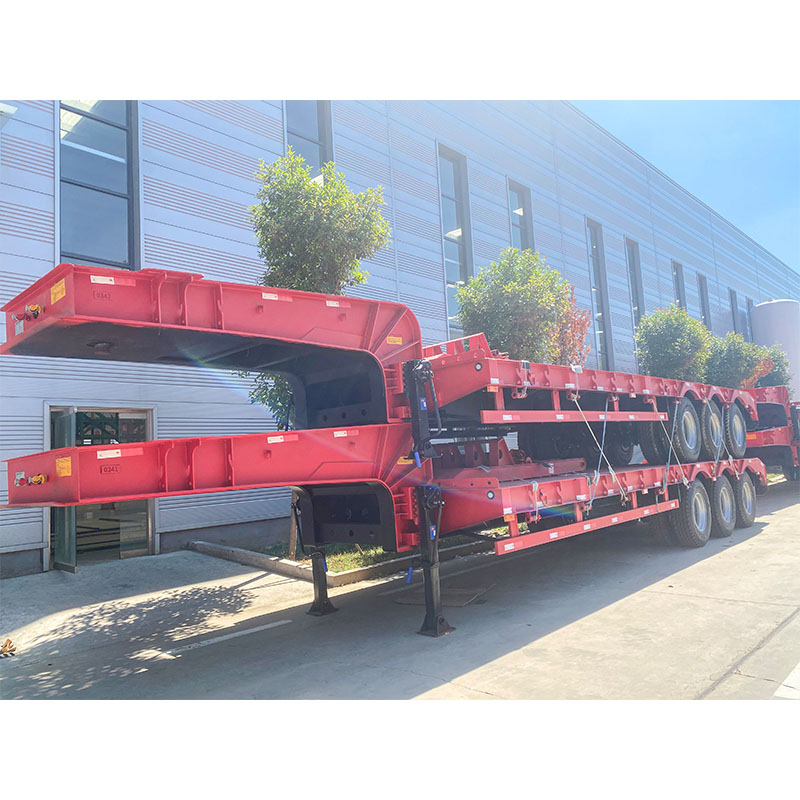
The first fork is the trailer family itself. A skeletal container chassis is the leanest steel structure we build — no deck, no walls, just a frame carrying twist locks — so the 40ft container trailer price lands between $7,000 and $15,000, with the 2-axle 20ft builds at the bottom and heavily customized 45ft units at the top. Step up to a lowbed with its reinforced main beam, loading ramps and 30–150 ton payload range, and the band widens dramatically: the 3 axle lowbed trailer family spans $11,000 to $50,000. Tank trailers break the pattern again, because capacity and tank material — not chassis steel — dominate their quotes.
| Trailer family | Typical band | What moves the number |
|---|---|---|
| Container chassis (20/40/45ft) | $7,000 – $15,000 | Axle count, twist-lock sets, customization |
| Lowbed (30–150 t) | $11,000 – $50,000 | Payload class, steel grade, ramps, axles |
| Tank trailers | Quoted by capacity | CBM, carbon steel vs aluminum vs stainless |
That means when a buyer asks the price of a semi-trailer, the chassis family alone locks the quote into a $40,000 price band. All subsequent choices then refine this figure further.
Line 2: Steel Grade and the Main Beam
Two trailers can carry the same model badge and still differ by $8,000–10,000, and the single biggest reason is hidden inside the beam. Standard builds use Q345B structural steel; heavy and over-length builds step up to T700 high-strength plate, which costs more per ton but lets us use thinner, lighter webs for the same payload. Factor in the stepped plate thickness design for the main beam, plus automatic submerged-arc welding that maintains consistent weld quality, and you start to see the real price gap between trailers built to hit a low price and those engineered for long fatigue life. Cheaper quotes almost always shave this line first — which is why we tell buyers to ask for the beam spec, not just the tonnage badge, before comparing two offers.
Line 3: Axles, Suspension and the Running Gear
The running gear is arithmetic you can audit. Every axle is rated at 13 or 16 tons (FUWA or BPW), so a 2-axle chassis and a 4-axle lowbed differ by two axles, eight tires, brake circuits and a longer frame — the full axle math behind a 100 ton lowbed quote is worth reading before you sign anything. Suspension comes next in your selection: mechanical leaf springs are the reliable standard for rough African road routes. Air suspension safeguards fragile cargo, while hydraulic systems are built for heavy mining applications. Every upgrade adds a clear cost item on the quotation sheet, and the trade-offs are laid out in our suspension total-cost-of-ownership breakdown. King pin (#50 or #90, JOST) and 28-ton two-speed landing gear round out the line.
Line 4: Accessory Add‑ons
After the chassis, the sheet fills with small lines that add up fast: 4 or 12 twist-lock sets on a flatbed, sidewalls that turn one deck into three cargo personalities, a mechanical spring ladder versus a hydraulic one, steering axles on long lowbeds, widened decks for out-of-gauge machinery, thermal insulation on fuel and bitumen tanks. A 30-ton bulk cement tanker and an 8,000 gallon fuel tanker share a chassis philosophy, yet their add-on lists barely overlap. None of these lines is expensive alone; the discipline is refusing the ones your route never uses.
Line 5: Freight — The Line Buyers Forget
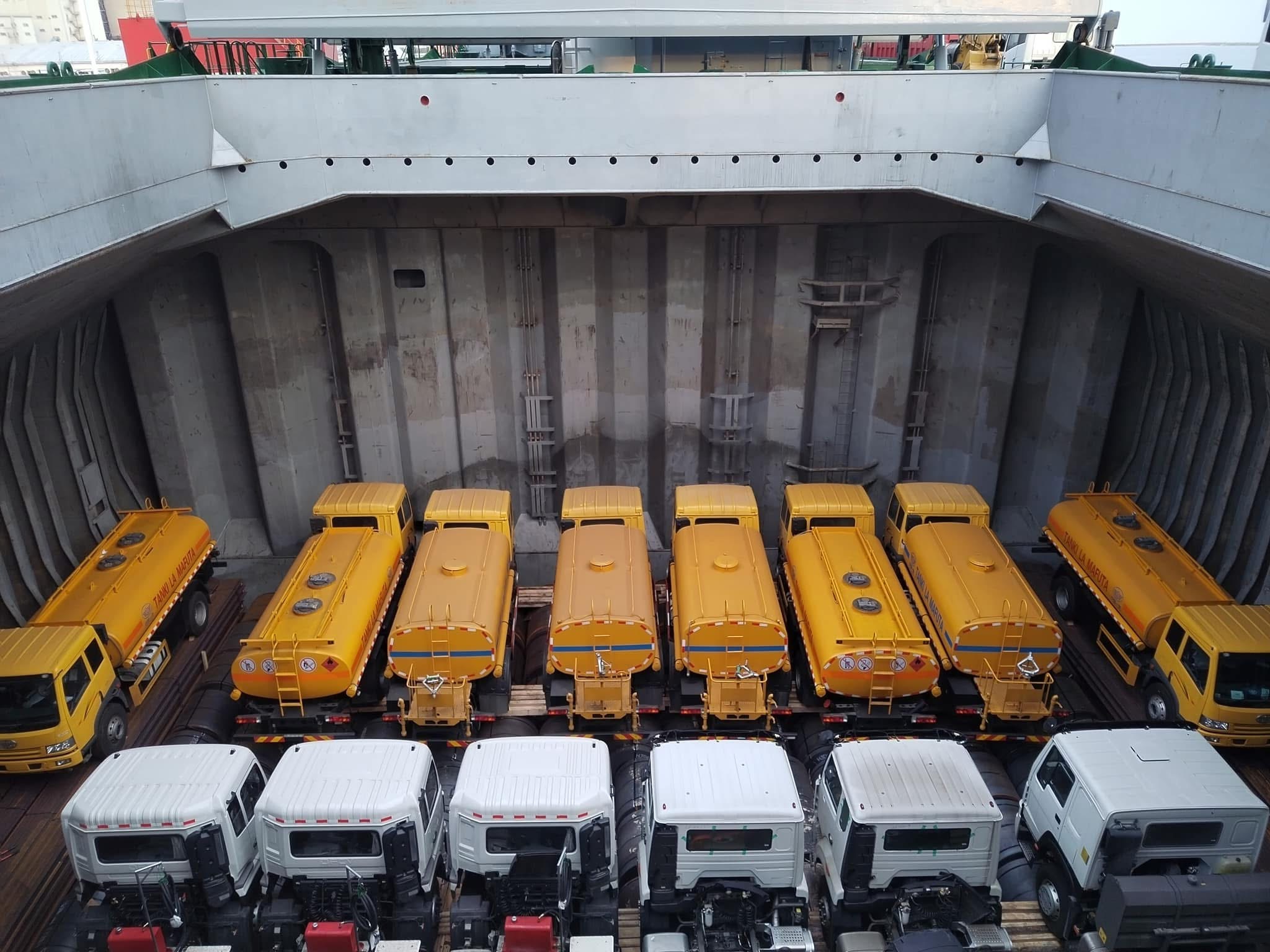
A factory quote is FOB by default, which means the semi trailer cost keeps running after the trailer leaves the gate. Container shipping fits one knocked-down trailer into each 40ft container and works well for smaller orders. RoRo shipping, by contrast, lets fully assembled trailers be driven directly onto the vessel; break-bulk vessels stack six or more units for large fleet deals — we compare the three methods in this shipping-method guide. The spread between the cheapest and priciest option for the same order routinely reaches four figures per unit, and it changes with every sailing schedule. Hand your destination port to our quote desk through the inquiry form and this line gets priced with real schedules instead of guesses.
Line 6: Duties and the CKD Backdoor
The final line is written by your own customs code. A fully assembled trailer clears customs as a single finished product under one duty tariff. By contrast, the same trailer shipped as a CKD or SKD kit — disassembled for local assembly — often attracts a lower duty rate and comes with a shorter lead time. That explains why many of our fleet customers operate small in-house assembly lines. The economics of that switch are detailed in our CKD and SKD cooperation guide. On a ten-unit order, this single line can swing the landed cost by more than the price of an entire extra trailer.
Why Every Quotation Has an Expiry Date
Steel plate is a commodity, currencies move, and ocean freight has been known to double in a quarter. That is why our quotations — like most factory quotes — carry a 15–30 day validity window. A semi trailer price pinned in March is not the price of the same build in May. The quote sheet is a snapshot of six moving markets, and the expiry date is simply the factory admitting it.
How to Get an Accurate Number in One Round
Quotations are prepared most quickly and accurately when we receive these five key details together: what you haul (cargo type), how much it weighs (payload class), the roads it runs (corridor conditions), which port it lands at (freight and duty line), and how many units (batch pricing and shipping method). With those five answers, the quote desk prices all six lines in a single pass — no ping-pong, no padded buffer for unknowns. Skip one, and the factory quotes defensively to cover the risk.
Want the actual number for your configuration? Provide cargo, payload, route, destination port and order quantity through our contact page or WhatsApp — the quote desk replies with a line-item cost sheet, not a vague range, so you can see exactly which of the six lines your budget is buying.