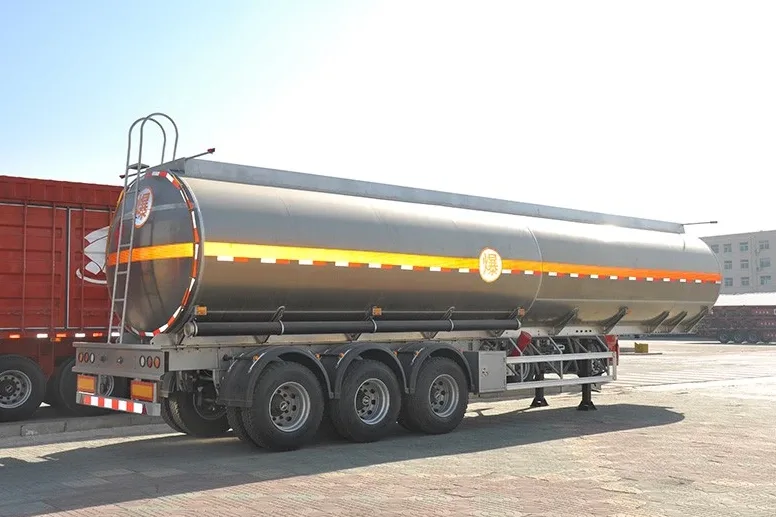
When a fuel distributor in East Africa sends an inquiry for a fuel tanker trailer, the message often reads the same way: “We need tanks for diesel and petrol, around 40,000 liters, please quote.” What comes back is rarely one quotation. It is usually two — sometimes four — because in fuel hauling, the trailer is never chosen first. The fuel is.
That single keyword actually covers at least four completely different trailers. Diesel, gasoline, acid and bitumen all move by tanker — but each one forces a different tank material, a different valve setup, and often a different axle count.This walkthrough of the fuel tanker semi trailer range at Vehicle Master shows exactly where those decisions diverge — and where every build, regardless of fuel grade, stays identical.
The Diesel Spec: Where Carbon Steel Wins on Economics
Diesel is the most tolerant fuel in the lineup, which is why the 40,000-liter diesel tanker trailer is the volume seller of the range. Carbon steel is more than enough for regular diesel, and it keeps the unit price at a level fleet operators actually want. Tank volume runs from 20,000 to 55,000 liters across 2, 3 or 4 axles rated at 13 or 16 tons each — so the same platform covers anything from short regional deliveries all the way up to long-haul trunk runs into landlocked countries.
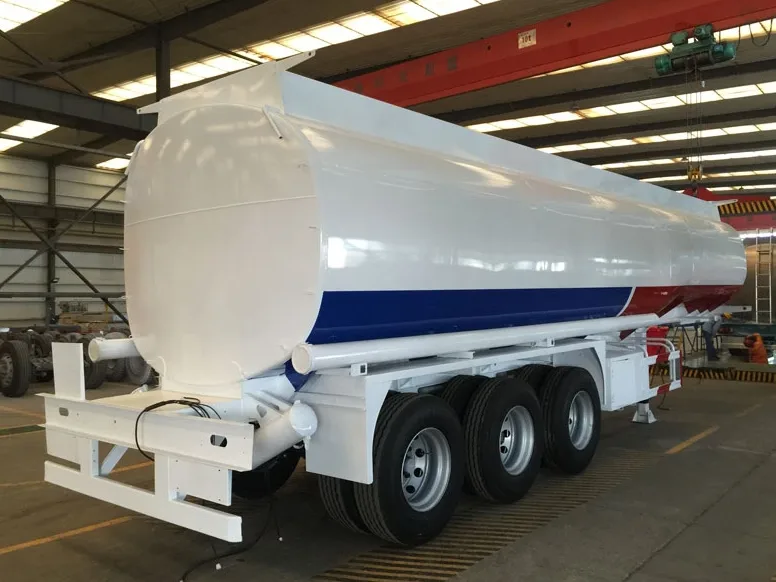
The diesel spec is also where the optional list starts earning its keep. A vapor recovery system captures volatile gas instead of venting it. An anti-rollover monitor tracks tilt angle in real time and warns before a curve becomes an incident. The anti-explosion manhole cover comes standard, and every tank leaves the line after X-ray examination of the welds. None of this is exotic — it is the baseline of a road-legal fuel operation in most African markets.
The Gasoline Version: A Longer Safety Checklist
Gasoline changes the conversation, because flash point changes the rules. Where diesel forgives, gasoline punishes — so the gasoline tanker trailer build adds a second layer of protection on top of the diesel list.
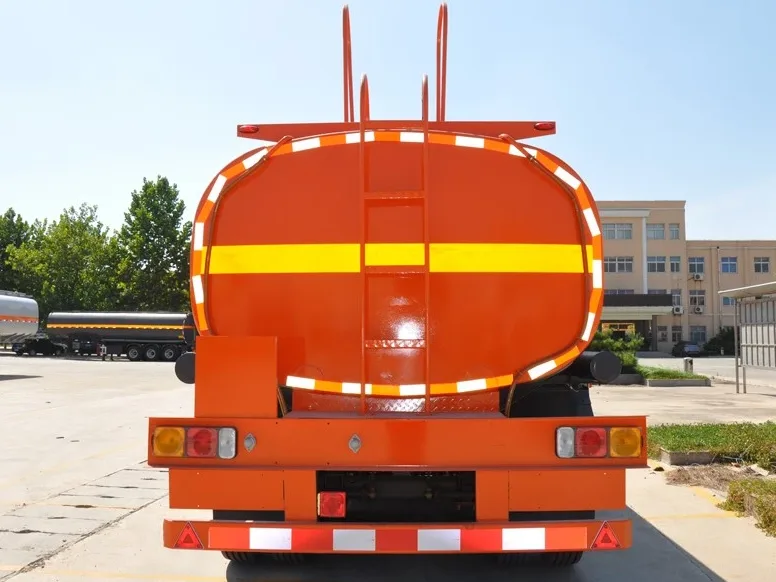
Three additions matter most. The anti-overflow valve shuts the inlet automatically as the tank nears full capacity, which removes the single most common cause of loading-pad spills. The explosion-proof manhole cover seals vapor in while still allowing inspection and cleaning. And a high-efficiency pumping system handles loading and unloading across fuel viscosities, sized for station forecourts that cannot wait an hour per drop. Capacities run from 5,000 to 16,000 gallons with the same 1–9 compartment flexibility, and the paint system moves up to electrophoresis plus polyurethane for corrosion resistance that outlives the loan on the trailer.
Acid and Chemicals: The Material Follows the Medium
Move past fuels and the tank itself changes. The acid tanker trailer rides on air suspension rather than leaf springs, because a sloshing corrosive load punishes a rigid frame. The 22,000–30,000-liter tank carries an acid-resistant coating or full liner, a 16-inch aluminum manhole with breather valve, and a safety package that reads like a chemical plant checklist: emergency shut-off valves, overfill protection and spill containment.
The choice of pump matters just as much. Customers usually pick a centrifugal pump driven by a gasoline engine, diesel engine or electric motor, depending on where the trailer will unload — a depot with grid power and a remote mine site without power are essentially two different orders. If the material question feels unfamiliar, our earlier guide on choosing between carbon steel, stainless and aluminum tanks breaks down the chemistry behind each option.
Bitumen: The Hot End of the Range
Bitumen arrives as the fourth spec, and it is the one that cannot cool down. The stainless 4-axle bitumen tanker adds heating configuration and thermal insulation to keep asphalt flowable across long delivery distances, with four axles carrying the combined weight of steel tank plus hot load. Road-building programs across East and West Africa keep this configuration in steady demand — when a paving season starts, the bitumen fleet cannot wait.
The Compartment Breakdown: 1 Trailer, 9 Possible Loads
Across all four fuel grades, one option does more for fleet economics than any other: compartments. Every tank in the range is configurable from 1 to 9 compartments, each with an own discharge valve, so a single trailer can carry different fuel grades at once without cross-contamination — diesel and petrol on the same run, or petrol at two octane grades plus kerosene.
The 20–55m³ fuel tanker semi-trailer page details the hardware behind that flexibility: a 4-inch aluminum bottom valve per compartment, 3-inch rubber discharge hoses in 6-meter lengths, and hose racks in carbon steel or aluminum. For a distributor supplying a string of stations along one highway corridor, the compartment count decides how many invoices a single trip can generate. It is the most profitable number on the spec sheet.
What Doesn’t Change: Welds, Paint and Delivery
Regardless of the fuel grade you carry, the chassis and build standards stay the same across the range. Main beams are Q345/T700 high-strength steel, and the running gear follows a shared spec sheet: 2-inch or 3.5-inch JOST king pins, 28-ton two-speed landing gear, mechanical leaf or air suspension, and 12R22.5 or 11.00R20 tires in 8, 12 or 16 pieces depending on axle count. Welding is held to national standards — each seam gets about 30 minutes more arc time than the minimum requires — and every tank is X-ray inspected before painting.A polyurethane composite painting process seals the deal against road salt and wet-season corrosion. The factory has been building fuel transport equipment for four decades, and every trailer ships with a one-year warranty plus spare-parts support.
The 50 fuel tanker units delivered to a Ugandan petroleum distributor show what that consistency looks like at fleet scale — same build discipline, repeated fifty times. And for buyers watching import duties, the CKD and SKD assembly option ships the same tanks as knocked-down kits for local assembly. Water transport fleets face a parallel set of decisions, which we covered in the water tanker trailer builds walkthrough.
Specifying a fuel tanker starts with one question: what does it carry? Send us the fuel grade, the volume per run and the route — depot or station forecourt, highway or mine road — through the inquiry form, or message us directly on WhatsApp. Our team replies with a configuration proposal and a factory quotation, usually within one working day. For a full view of tank options across fuel, acid, bitumen and water service, request the 2026 product catalog and hand the spec decisions to our engineering team.