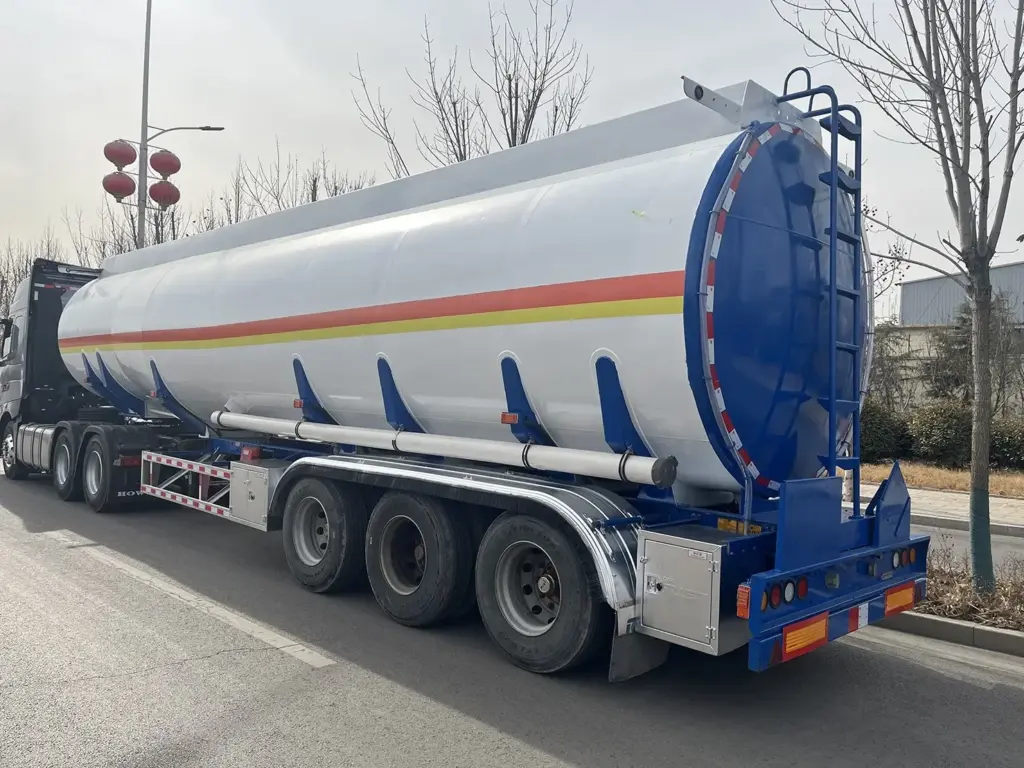
Water is the freight nobody prices like freight. On a water tanker trailer order, the conversation almost never starts with the trailer. It all begins with the run itself: where the water is drawn from — a river intake, a borehole, a municipal hydrant — and where it is headed: a construction site for dust control, a mining camp’s storage tanks, a town through the dry season, or a farm’s irrigation head. Tank capacity, discharge method, every spec that follows is set by that route, not by the catalog.
Here is how those spec decisions actually get made when we quote a water tanker build at Vehicle Master.
The Run Decides the Tank
Capacity comes first, and it is arithmetic, not ambition. A three-axle water tanker semi trailer carries 20,000 to 50,000 litres as standard, with custom volumes up to 60,000 litres for operators whose road laws and bridge ratings allow the extra payload. Daily demand sets the target: a road construction crew spraying haul routes needs fewer trips at higher volume, while a camp supply contract values a steady mid-size shuttle.
The second thing to settle is delivery pressure. Refilling ground-level tanks or open pits needs nothing more than gravity. But topping up a site water bowser or feeding an elevated reservoir changes the job — the tank has to push water uphill, not just let it run out.
Two builds cover most of the water runs we quote:
| Build | Capacity | Configuration | Where it earns its keep |
|---|---|---|---|
| 3-axle water tanker | 20,000–50,000 L (custom to 60,000) | D-type or round tank, mechanical or air suspension | Sites, camps and irrigation at volume |
| 30,000–40,000 L water tank semi trailer | 30,000–40,000 L | Tri-axle, air ride suspension, optional diesel centrifugal pump | Municipal and contract water delivery |
Fifty Tonnes, Moving on Its Own
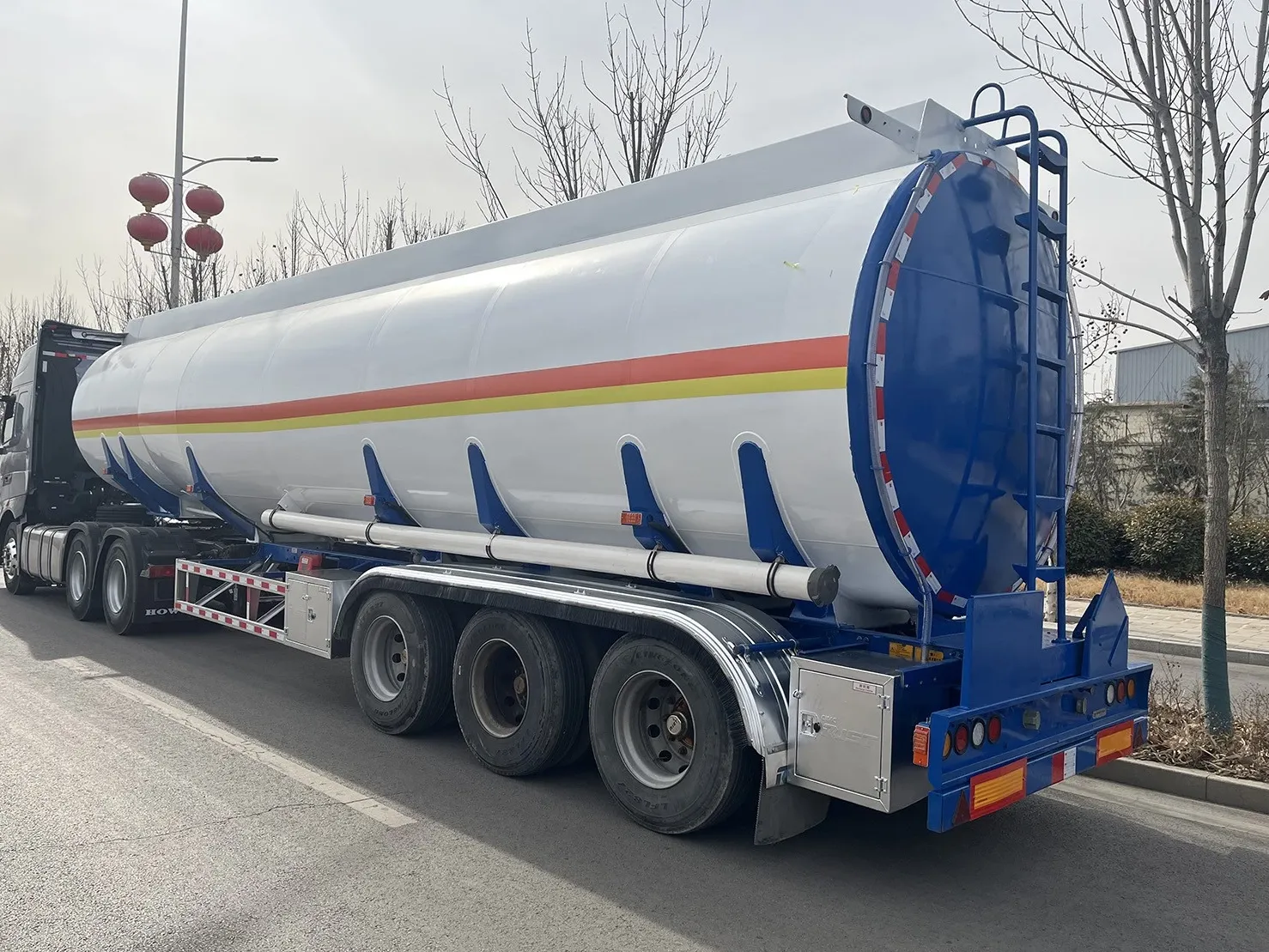
The engineering problem unique to tankers is surge. A 50,000-litre load is not dead weight; it is a liquid mass that slams forward at every brake application and rolls side to side in every corner. An under-specified tank writes off brake linings, hammers the chassis and eventually puts the combination into a shoulder. This is why the internal build matters more than the external shine.
Every water tank we build carries anti-surge baffles to break up that moving mass, sealed flange joints with high-pressure gaskets against leaks, and reinforced welds that go through X-ray examination before the tank leaves the hall. Emergency brake valves, anti-roll bars and overfill protection are part of the safety kit, not extras. For operators running multi-drop routes, compartment counts range from one up to nine. Every internal wall doubles as a surge dam — which is why a nine-bay municipal tanker rides so much steadier than one single open tank.
The welding itself is robotic on the tank seams — the kind of consistency that decides whether a tank weeps at year three or holds for the life of the trailer. We walked through what that production floor looks like in our factory profile.
The Material Follows the Water
Tank material is chosen by what is inside the tank. Raw water for compaction, dust control and concrete work runs happily in the standard stainless or aluminum build with anti-corrosion lining. Potable water contracts are stricter: stainless steel or aluminum with a food-safe lining, and a maintenance regime to match — a weekly flush schedule for drinking-water tanks against a monthly flush for general water.
We broke down the full carbon-steel-versus-stainless-versus-aluminum trade-off for tanker builds in this material guide, and the same logic scales: when a Ugandan operator ordered 50 tanker trailers in one fleet order, the material and compartment spec was settled per route, not per fleet. Water runs deserve the same scrutiny — drinking water punishes a wrong material choice faster than diesel does.
How the Water Gets Out: Valves and Pumps
Judging a water tanker by its fill time is only half the story — discharge is where the cheaper builds show their weak spots. Gravity flow through a wide-opening valve empties the contents fast into ground-level sumps or receiving tanks: no engine, no electrics, just a valve to service. The moment water has to go up or travel — filling an overhead reservoir, pushing through a stretch of site pipe, or reaching the inlet of a separate water cart — gravity stops being enough. That is when the pump option matters. The 30,000–40,000 litre tri-axle can be optioned with a centrifugal pump off its own diesel engine; for elevated or long-reach delivery, electric or hydraulic discharge gives adjustable flow on demand.
Filling is specified with the same care: a 20-inch manhole with cover and breather valve for fast loading, hoses and fittings matched to the agreed arrangement. The rule we apply is simple — quote the discharge, not just the tank, or the operator discovers the gap on the first delivery.
The Chassis Under the Load
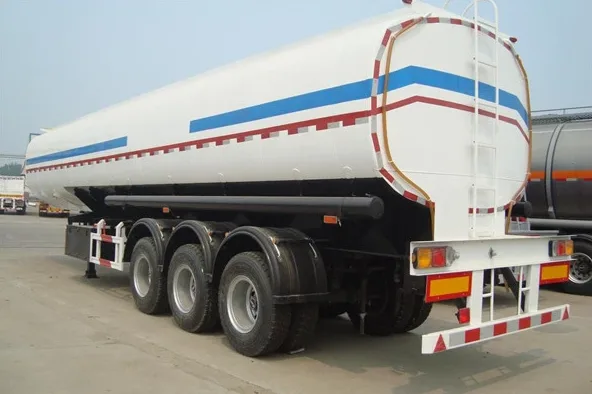
Beneath the tank, the running gear is built to match the load. The standard three-axle setup measures 13,000 × 2,500 × 3,800 mm and rides on twelve tires — 12R22.5 or 11.00R20 to spec — with air brakes including ABS, a 2-inch or 3.5-inch kingpin to fit your existing tractor units, and 28-ton two-speed JOST landing gear.Suspension is the operator’s call — mechanical leaf for rough rural routes, or air ride, which comes standard on the 30,000–40,000 litre build, for municipal work where a smoother ride protects both the tank welds and the road reputation. The suspension trade-off deserves its own reading, and we did the math in our suspension cost breakdown.
The platform is shared with the rest of the tanker semi trailer line — fuel, bitumen and acid builds ride the same chassis engineering — which is why the water tankers inherit heavy-liquid discipline by default. The full water tanker model list shows both builds side by side.
What We Ask Before We Quote
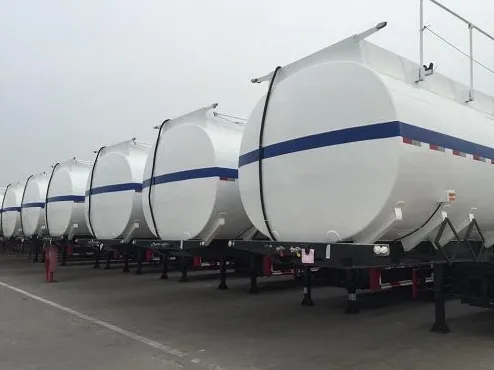
A water tanker quote is only as good as the questions behind it. Before we configure a build, we ask for: the water source and how it is drawn; the destination and its delivery height; the daily volume; whether the water is potable; how many drops per trip; the road conditions between source and destination; the quantity; and the destination port for freight planning. Nine answers, one exact specification — tank volume, material, compartment count, discharge method and chassis in a single sheet.
Send those nine answers back to us through the inquiry form or WhatsApp, and we will reply with your full configuration — including the freight plan.
Spec Your Water Tanker Trailer With Vehicle Master
Tell us where the water comes from, where it goes and how much per day — our engineers confirm tank capacity, material, compartments, pump options and shipping in one quotation. Reach the team via the contact page.