The Box Lands, and the Real Journey Begins
When a container is discharged at Mombasa, Djibouti or Lagos, the shipping line’s job is largely done. The importer’s job is just starting. The inland leg — port to dry port, port to warehouse, port to construction site — is where freight costs accumulate, where delays bite, and where the humble container chassis trailer quietly decides how much of the margin survives the trip.
For years the default buying pattern was simple: one generic 40ft chassis, ordered in bulk, run on every lane. That pattern is fading. The lanes themselves are now doing the specifying.
Three shifts are now reshaping how African fleets order chassis
Container volumes at the major gateway ports keep climbing year after year, and the overflow keeps pushing deeper into inland corridors. Meanwhile, drop-and-hook shuttle work — a tractor drops a loaded box, hooks an empty one and heads straight back — has moved off the quayside and into dry ports from Nairobi to Addis Ababa and along the Lagos–Ibadan corridor. And the box mix in circulation is no longer uniform: 20ft, 40ft and the occasional 45ft unit share the same lanes, with empties repositioned almost as often as loaded containers.
Put together, fleets that once ordered one chassis model now ask a different question: which chassis for which lane?
Match the Box First
Every chassis decision starts with the container, not the catalogue. A 40ft frame remains the workhorse of international trade because it takes one 40ft box or two 20ft boxes on standardised twist-lock positions — which is exactly what makes quick terminal turnaround possible. Fleets locked into lighter 20ft flows often do better with a 20ft skeletal container semi trailer whose adjustable frame stretches up to 40ft when the mix shifts, with eight or more twist locks spaced along the bed.
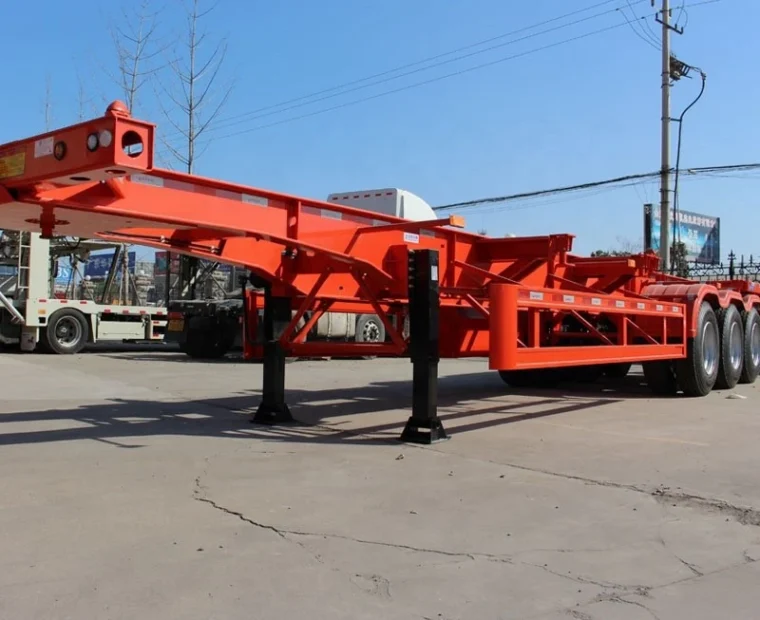
Where a lane carries genuinely mixed traffic — 45ft units one week, twin 20s the next — an extendable skeletal trailer telescoping across the 40-to-60-foot range removes the guesswork. The twist-lock configuration deserves more attention than most buyers give it. A properly designed frame carries 4, 8 or 12 locks, positioned to line up with the corner fittings of the containers actually running on your lane — so a driver never has to crawl across the bed adjusting loose locks in the middle of a shuttle.
Then Match the Road
The second question is what the lane’s road network will tolerate. Axle count is the lever: 2 and 3-axle chassis cover most national gross-weight rules, while heavier flows justify 4-axle configurations from the 20–80 ton end of the range. Suspension follows the surface. Mechanical multi-leaf springs absorb punishment on unpaved port access roads; air suspension protects the ride — and the driver — on finished highways, a trade-off we break down in detail in our suspension cost-of-ownership analysis.
Tire fitment is regional by nature — 12R22.5 and 11R22.5 standards dominate, and matching what local service networks actually stock keeps a fleet moving. On long corridors, every kilogram of tare weight surrendered is payload gained trip after trip, which is why serious operators compare frame steel and tare figures as closely as price.
Match the Operation, Not Just the Trip
A port shuttle chassis lives a different life from a corridor hauler. Shuttle duty means hundreds of couplings a month, so landing gear takes centre stage — JOST 28-ton legs are the reference spec for a reason — and lock-handling speed shows up directly in driver hours. Corridor work rewards durability over convenience. And when the cargo profile is irregular by design, a customised 20–45ft container chassis built around the actual box distribution costs more per unit and less per year. Custom length, extra axles, gooseneck structure and air suspension each move the price — but they also move what the trailer earns.
What the Factory Floor Brings to the Table
A chassis earns its keep outdoors — salt-laden port air, roads softened by months of rain — so corrosion protection is a structural requirement, not a cosmetic one. Before any paint goes on, every frame at our plant is degreased, phosphated, and passivated in three pre-treatment baths, then dipped in electrophoresis primer — the same base process used on export-grade commercial vehicles. That is the difference between a chassis that looks right on delivery day and one that still passes inspection after five wet seasons.
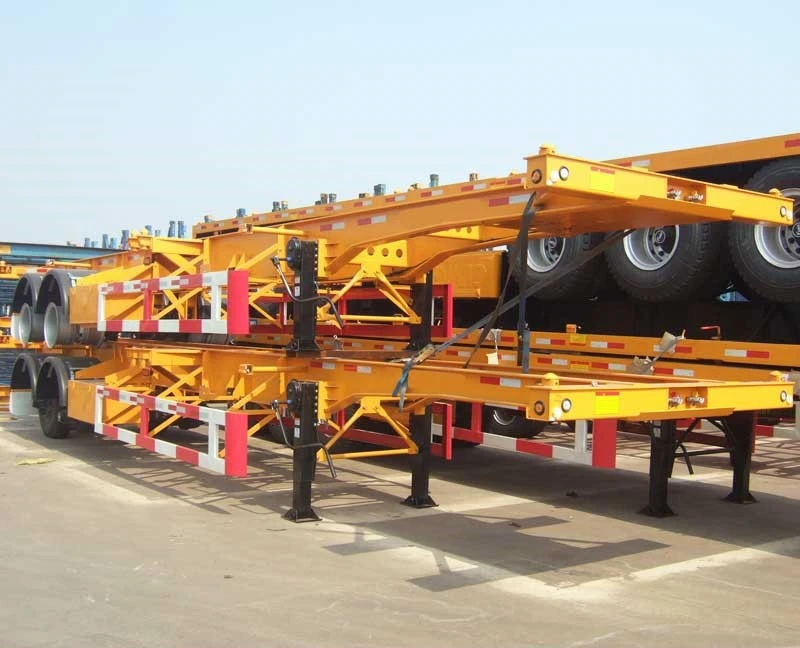
Delivery logistics matter as much as build quality: a batch delivery of 82 semi-trailers to Ethiopia showed how container-loadable, stackable skeletal units move efficiently by sea, and choosing between RORO, container and break-bulk shipping is a decision worth making early — we walk through the options in our shipping-method guide.
Specs Follow the Route
It was never about a bigger budget — it is about a sharper brief. The fleets getting the most out of their chassis today arrive with route facts in hand: box mix, axle limits, road surface, shuttle frequency, destination port. Hand us those five numbers and the right spec builds itself. Leave them out, and you are back to ordering one chassis per job — in a market that has already stopped working that way.