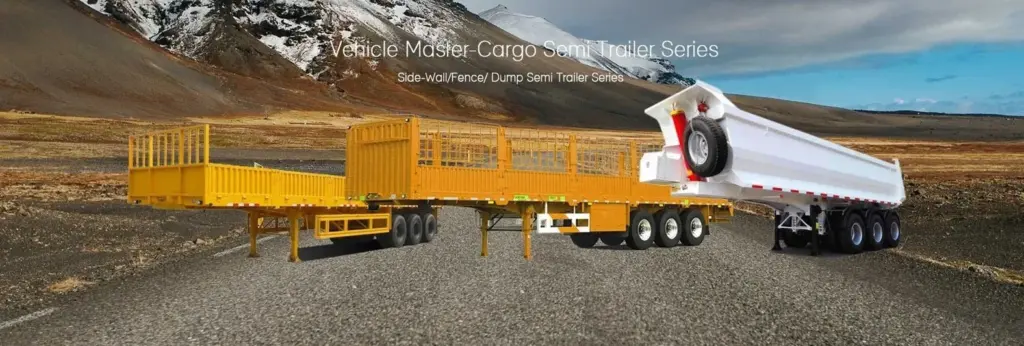
At Vehicle Master, hardly anyone comes to us asking for a side wall trailer straight out. The conversation usually begins with a problem. Take a fleet that has hauled on flatbeds for years: they win a contract moving bagged cement, distributor goods or building materials like bricks and timber, and before long those familiar trailers are eating into their schedule. Ratchet straps crush the boxes. Tarps rip on the third run. Bags shift on rough corridors and arrive burst at the seams. Something small always walks off during an overnight stop. The fix is not more straps. The fix is the wall decision.
What Side Walls Actually Do For Your Fleet
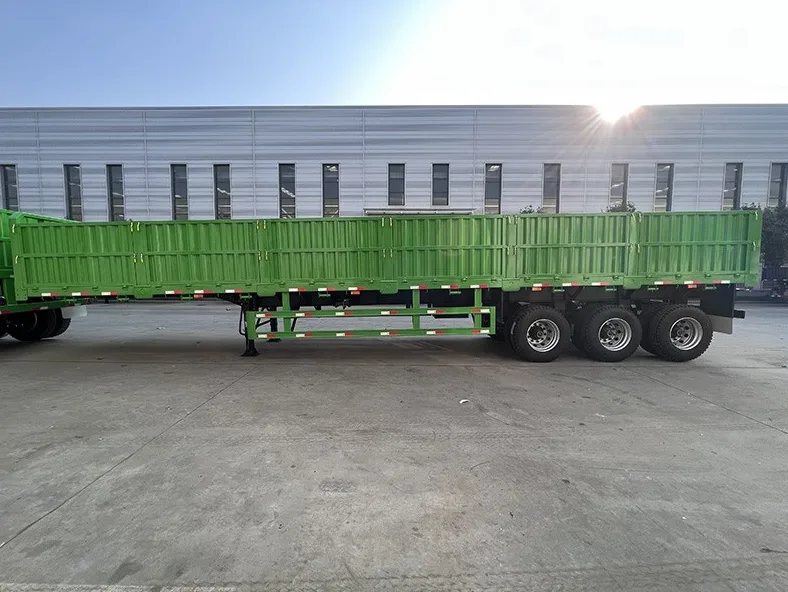
By design, the engineering gap is minimal. Take the side boards off a side wall semi trailer and what’s underneath is a flatbed — structurally, that’s the entire difference between the two. Everything that changes shows up in how the trailer is worked day to day. High-strength steel boards, 1.5 to 3 mm thick, mount on 42 reinforcing ribs above a 3 mm checker-plate floor. Loads sit inside the walls instead of being wrestled into place. Ropes, ratchet straps, edge protectors and tarps leave the cost sheet. Loading time drops because loaders stack against steel instead of building a strapped bundle by hand. And a wall is a one-time purchase that does not wear out every season the way a tarp does — an option we have compared in detail in our flatbed and lowbed guide, because the deck type is the first fork in every freight spec.
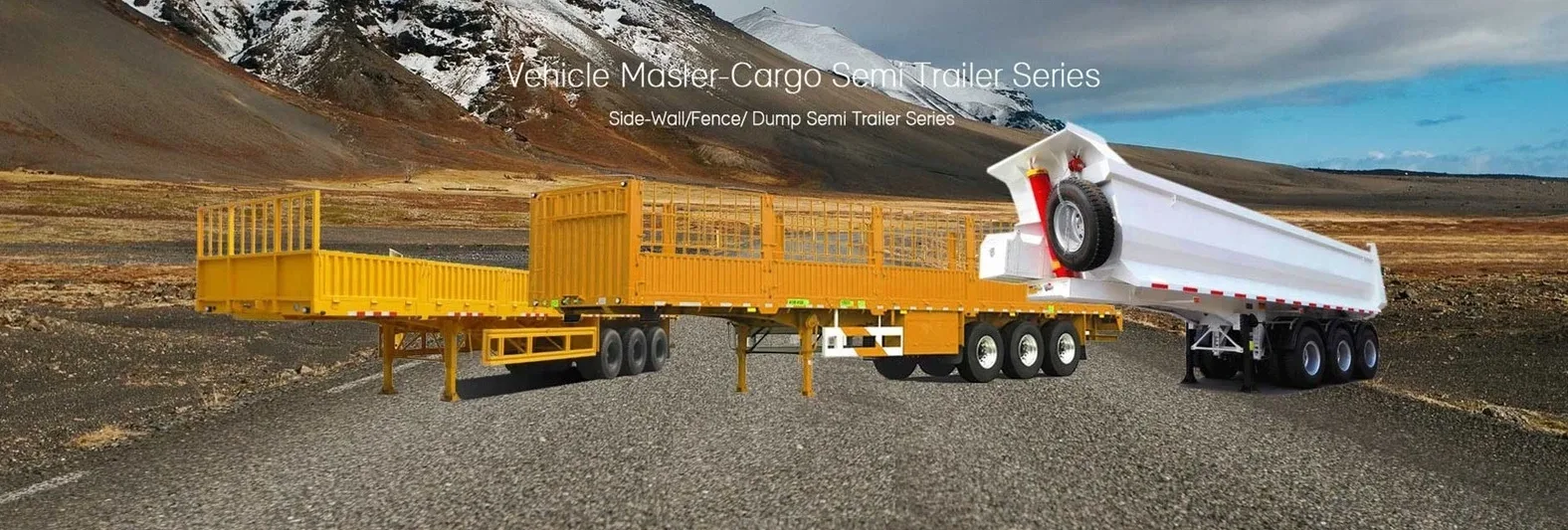
When the cargo needs airflow rather than rain protection — livehaul runs, produce, empty packaging — the open wall format does the job a box van cannot. When the cargo needs weather cover, a canvas top closes the deck over the walls. And when the run crosses livestock country, many buyers step across to our fence semi trailer lineup, which keeps the same containment logic with mesh panels instead of solid boards.
Decision One: How High the Walls Go
Wall height is the first number we settle, and it is chosen by the manifest, not by preference. Across the lineup the side wall spans 600 mm to 1700 mm. A low 600 mm wall suits bagged cargo and palletised cartons — high enough to contain a shifting load, low enough for a forklift to work over the top from either side. Mid-height walls around 800 to 1100 mm carry mixed pallets with cartons stacked above deck level. Tall walls approaching 1700 mm turn the deck into a genuine bulk box for bricks, timber, pipe and loose bulky items that no strap pattern can tame. Heights beyond the standard range are engineering requests rather than catalogue picks, and our design team quotes them the same way as any special build.
Decision Two: Axles and the Payload Tier
The second number is the axle count, and it follows the payload tier your loads actually weigh — not the biggest load you have ever hauled once. The 2/3/4-axle side wall semi trailer family covers three tiers: 30–60 tons on two axles, 30–80 tons on three, and 40–100 tons on four. Underneath, the main beam is 500 mm tall in Q345B or T700 steel, and the plate stack thickens with the tier — from 12/6/14 mm on the 2-axle build to 18/12/20 mm on the 4-axle build — so the beam, not just the axle count, carries the tonnage. Underneath, you’ll find 13- or 16-ton axles by Haoyue, FUWA or BPW; up front, the JOST king pin is offered in 2″ or 3.5″, and a 28-ton two-speed landing gear supports the trailer at rest. Suspension is the remaining choice — mechanical or air — and the right answer is a running-cost question we break down in our suspension ownership comparison.
The Lineup at a Glance
Because the wall decision sits on top of a common chassis logic, the catalogue stays compact. Six builds cover most of the mixed-cargo freight we ship to African ports:
| Build | Axles | Payload tier | The run it is built for |
|---|---|---|---|
| 2-axle 60 ton side wall trailer | 2 | 30–60 t | Regional bagged and pallet freight |
| 2-axle 60 ton 40ft side wall trailer | 2 | up to 60 t | Container-length palletised loads |
| 3-axle side wall semi trailer | 3 | 30–80 t | Long-distance mixed cargo corridors |
| 4-axle 100 ton build | 4 | 40–100 t | Heavy bulk on a thickened beam |
Outside these tiers sit the specialists. The 60-ton construction build is quoted for site runs where the deck doubles as a materials platform. The 3-axle 28-ton build trades payload for legal-weight flexibility on corridors with strict axle limits. The high-strength steel version pushes the T700 beam and wall material spec for operators who load at the tier maximum every trip. And the long-distance cargo variant packages the format for haul contractors: 45 tons of payload on a 6.5-ton tare, ABS-capable brakes, a 24V LED circuit and optional side doors, with mechanical or air suspension. It is the same containment logic that keeps fleets re-ordering our 30 ft flatbed trailer — buy the deck once, then let the cargo decide the furniture.
How the Walls Travel to Your Port
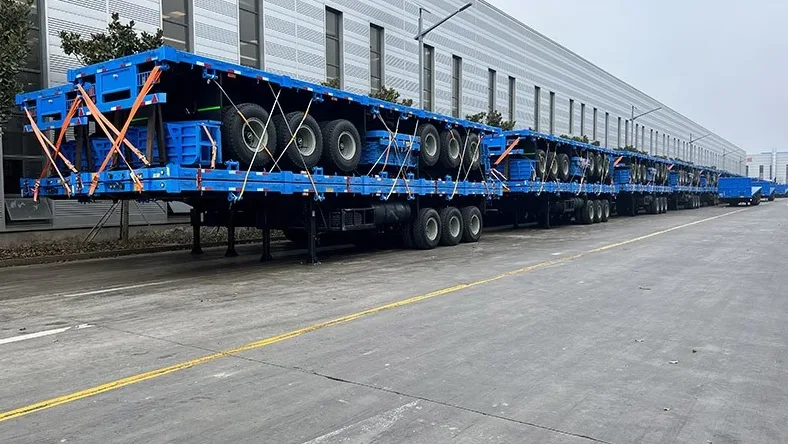
Every side wall trailer in the lineup ships the same way: the side boards are removed at the factory, stacked flat on the deck, and the whole unit travels as a compact stack — by container, flat rack, bulk carrier or RORO, whichever the order suits best, a choice we walk through in our shipping method guide. Once the trailer reaches its destination, the boards can be bolted back into place using ordinary tools. The frame underneath goes through shot blasting, a primer coat, then an electrophoretic dip and powder spray — a finishing line few Chinese trailer plants actually operate, and exactly why these decks stand up to coastal moisture and rainy-season routes. From deposit, the build takes seven working days.
Bring Us the Manifest, Not the Brochure
A side wall trailer quote is only as good as the cargo list behind it. The fastest route to an accurate configuration is five lines: what you load, how it is packed, the loaded weight, how it gets onto the deck — forklift, crane or side loading — and the destination port. Hand that spec to our team via the inquiry form or WhatsApp, and the reply comes back with the wall height, axle tier and freight plan already matched to the run.
Spec Your Side Wall Trailer With Vehicle Master
Share your cargo, load weight and destination, and our engineers will lock in the wall height, axle setup and shipping plan within one quotation. Contact the team via the contact page, WhatsApp or email — details are listed on the website.