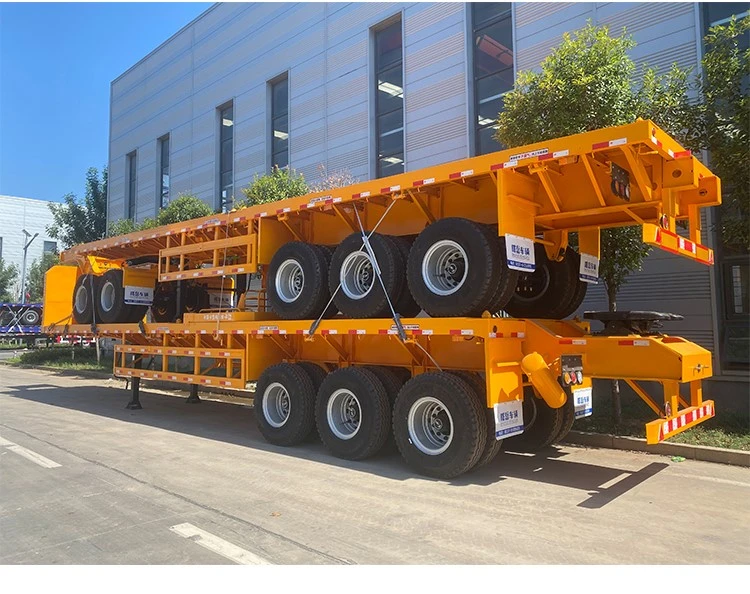
Every week our sales inbox sees the same question. A fleet owner in Lusaka or Kampala needs a platform trailer, and the choice always comes down to three quotes: a 20 ft unit that fits anywhere, a 40 ft unit that matches container standard, and something in between.More often than not, the purchase order that finally arrives reads 30 ft flatbed trailer. Not because it is the cheapest, and not because it is the biggest — because it is the length that keeps earning on the return leg.
That decision is worth unpacking, because it repeats across markets, cargo types and fleet sizes. Here is how operators actually think it through — and what the spec sheet should contain once the 30 ft decision is made.
Length Is Really a Return-Leg Question
The outbound trip is easy to fill: building materials, site equipment, bagged cement, steel. What actually decides whether the trailer makes money or sits idle is what it carries on the way home. A straight 40-footer thrives on the container run between port and inland depot, but once you push it onto regional routes it hits weight limits and comes back half empty. A 20-footer loads whatever, wherever — but that flexibility comes with a ceiling on earnings per trip.
The 30 ft flatbed trailer splits that difference in a way that matters operationally:
- Standard cargo fits. Rebar in customary lengths, cement bag stacks, water tanks, agricultural inputs and smaller excavators all load within 30 ft without overhang permits.
- Yards still work. Market loading bays, mine compounds and construction sites with tight turning circles that punish a 40 ft wheelbase remain workable.
- The whole rig stays within legal limits. On routes where overall length caps kick in early, a 30 ft unit keeps the tractor-and-trailer combination compliant — no special permit required.
In practice that means one unit covers the delivery run and the collection run — the double-earning pattern that keeps African regional fleets solvent.
Matching the Tonne Band to the Cargo
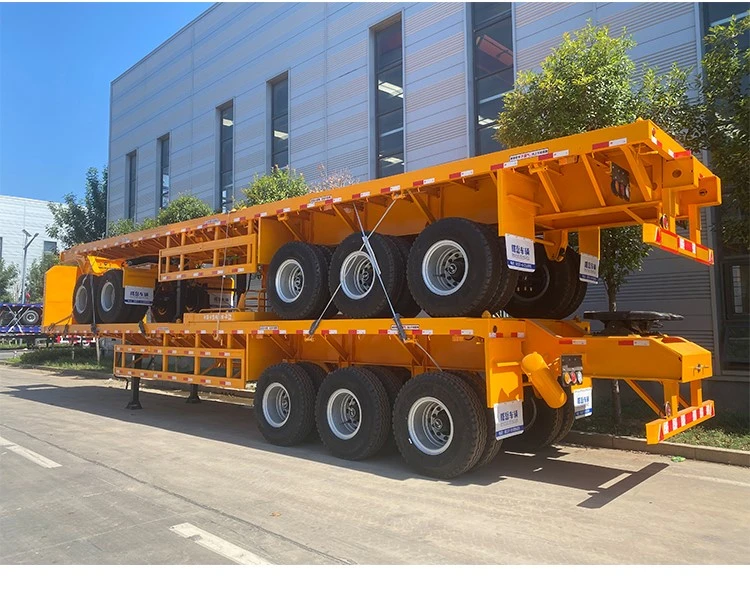
Once the length is fixed, the spec conversation moves to axles and steel. A 30 ft platform is not one trailer but a band of configurations:
The light-duty version runs on two axles and is rated for 30–40 tonnes — agricultural produce, bagged cargo, packaged consumer goods, and empty containers being repositioned inland.The heavy band runs three axles and carries 50–60 tonnes of construction materials and project equipment. Our 2–3 axle 30 ft flatbed semi trailer page shows both configurations side by side, with the deck, suspension and brake choices that shift between them.
Three material decisions do the heavy lifting in either band. Floor thickness follows the cargo: lighter duty cycles accept thinner plate, while steel and machinery runs call for heavier decking. Main beams decide service life — Q345B is the honest baseline, T700 high-strength steel is what heavy-repetition fleets specify. And suspension follows the road: mechanical leaf springs shrug off laterite and potholes, while air ride protects sensitive cargo on paved corridors — a trade-off we broke down in detail in Mechanical vs Air Suspension: A Total Cost of Ownership Breakdown.
One Chassis, Three Versions — Pick the Right One Before You Order
The 30 ft decision rarely ends at “flatbed.” Three close relatives share the platform, and picking the right one saves a costly second purchase:
Built to carry containers when you need them to. Twist locks turn an open platform into a container carrier — four sets for single-box runs, twelve sets for maximum flexibility. Fleets that only handle containers occasionally usually order a twist-lock flatbed rather than a dedicated skeletal chassis, so the deck stays free for loose cargo between box jobs. Operators running containers full-time should look instead at our breakdown of skeletal chassis versus flat platforms: the two solve different problems.
The drop deck. When cargo height matters — tall machinery, transformers, precast sections — a stepped deck buys back the legal height envelope. Multi-axle heavy platforms scale this idea to extreme loads, which we surveyed in Heavy-Haul Engineering: From 3-Axle Lowbeds to 300t Modular Platforms.
The fence body. Loose cargo that must not walk off the deck — charcoal, livestock feed, scrap — gets side walls or fence posts instead of lashing points alone. The reasoning behind our fence semi trailer lineup applies here: containment beats restraint when cargo geometry fights you.
Where Superlink Configurations Fit
Southern African operators add a variant the rest of the continent rarely sees: the interlink or Superlink combination, where a tractor pulls two short-decked trailers in a B-train style rig. Our Superlink flatbed trailer at 80 tonnes exists precisely for that market — payload economics there reward combination length over single-deck length. Hauling on the South Africa, Zimbabwe, Zambia or Mozambique routes? Get a quote on the Superlink configuration before you settle for a single 30 ft unit — the per-tonne economics often come out better than you’d expect.
Loading Method Decides the Details
The last layer of the spec is how cargo physically gets on and off — and it is where generic quotes quietly go wrong:
- Forklift loading from both sides demands reinforced side rails and clear apron edges; thin-edged decks dent within a season.
- Crane loading stands or falls on the lashing point layout: count the rings, verify each working load rating, and lay them out against your real cargo footprint before signing off the drawing.
- Don’t default to the catalog twist lock positions — size them to the box lengths you actually haul: 4 sets fit single-container routes, while 12 sets cover mixed 40 ft / twin-20 ft order books.
- Landing gear takes the daily hammering of uneven yard surfaces; spec a two-speed 28-tonne unit from JOST (or equivalent) if you want it to outlast the chassis.
None of these line items shows up in a price-first comparison. All of them show up in year two.
Five Confirmations Before the Deposit
Whatever you settle on for length, get five things in writing before the spec sheet is final: an axle-load distribution diagram matched to your tractor; material certificates for the floor plate and main-beam steel; the twist lock count and placement; the landing gear brand and load rating; and the coating system — electrophoretic primer beneath the topcoat, never topcoat on its own. A manufacturer that ticks off these five without hesitation is one that builds to specification as a matter of routine. Ours does it on every quotation — send your corridor map and cargo profile through the inquiry form and the five confirmations come back attached to your quote.
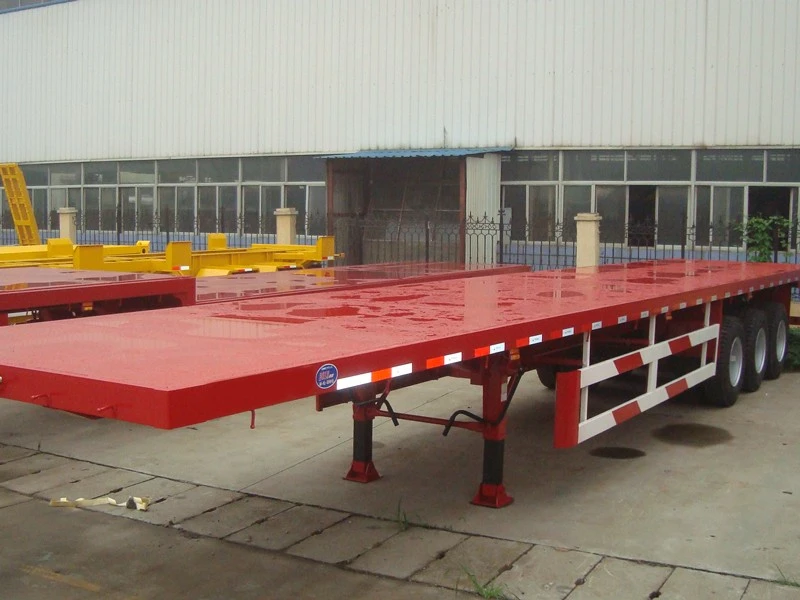
And if the operational maths keeps pointing back to flexibility rather than extremes, remember what the re-order pattern already knows: the full-length flatbed series runs 20 ft to 60 ft at 20–80 tonnes, but the middle of that band — the 30 ft flatbed, in two- or three-axle form — is the configuration that keeps coming back for a second and third order.
Mapping a 30 ft order for your fleet? Tell us the corridors you run and the cargo you carry — both legs — and our team returns a 2- or 3-axle 30 ft configuration with firm pricing, via the inquiry form or WhatsApp +86 166 6658 9022. Drawings, material certificates and axle-load diagrams come standard with every quote.